The Catalyst
September 2026
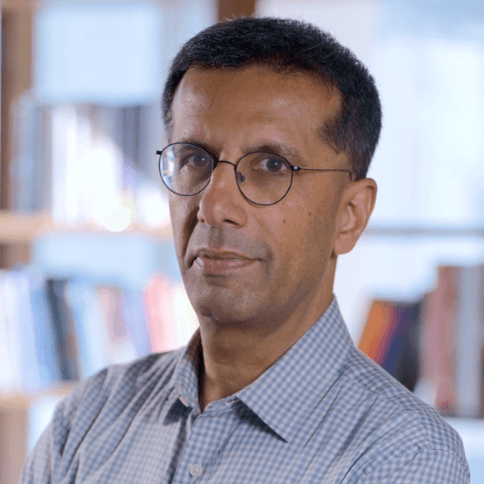
With tariff wars and even real wars heating up across the globe, India will find it difficult to realise its demographic potential unless some bold reform steps are taken.
Ashish Dhawan,
Founder-Chairperson, The Convergence Foundation
Ashish Dhawan,
Founder-Chairperson, The Convergence Foundation
As India moves to join the league of Viksit nations, how can it maximise its demographic potential? We, at The Convergence Foundation (TCF), along with our partner organisations, have drawn up a shortlist of key areas where the country could fruitfully focus its implementation energies. What are some big policy bets it can make to achieve that goal? We believe that we have to focus both on improving India’s long-term human capital (anchored in structural reforms in school education), and in large-scale job creation (anchored on export-oriented sectors with high employment potential). We have looked at evidence and expert opinion, studied leading practices from across Indian states and the world, including those adopted by India’s principal East Asian competitors.

1.75 lakh
Integrated government schools needed, across the country, by 2035
Given that most Indian children at the primary level go to school now, the next step is to impart high-quality schooling and to retain those children till school-leaving stage – both of which are interrelated aspects of the same problem. We propose three big-ticket reforms towards this end. One, a network of 1.75 lakh large, integrated and well resourced government schools that enable quality learning by 2035. At this scale, schools can provide one teacher per class, subject specialists at secondary level, libraries and labs. They can be managed and supported more effectively. Two, key stage assessments at the end of Grades 3 and 5 to assess learning outcomes, covering all public and private schools. These outcomes should be made visible and public, allowing schools to assess themselves and parents to assess schools. Three, permitting for-profit private schools, which will add to school supply while enabling diversity and competition within the system. It would encourage private investments into our school system, addressing massive funding requirements and improving the quality of education.
10,000
High-potential SMEs should be identified and supported to scale
As we work on improving human capital, ensuring job creation and productive employment is an equally urgent priority, and we have four big reform proposals here. One, India needs smart industrial policy for an interim period to build a manufacturing ecosystem at scale. Production-linked incentive support should be provided to 30 product categories that have been identified as having high potential for stepping up exports. This, according to estimates, can yield an incremental 2 crore jobs over the next 5 years, while generating an additional $230 billion in exports.
Two, set up a task force anchored at the seniormost level in the government, that is empowered and accountable for bringing in and retaining global value chain (GVC) anchor firms from an identified list of the biggest 30-50 in this category. Such a task force, chaired at the PMO level, can be paired with state-level counterparts in the 5-6 states that host the bulk of India’s GVC-scale manufacturing.

<1.5%
Of global tourists visit India, despite world-class destinations
Three, the bulk of job creation happens in India’s MSMEs. While there have been a number of schemes to support micro enterprises, the time has come to consider a scheme to identify and support 10,000 high-potential SMEs, enabling them to scale – so the small enterprise can go to medium and the medium to large. Objective criteria for selecting high-potential SMEs can include sales size and growth, export growth and number of export markets, financial health checks, R&D spend and number of patents.
Four, high-spending tourists generate one in ten jobs globally, across all skill levels. India has world-class tourist destinations encompassing mountains, beaches, deserts, wildlife, culture – but gets less than 1.5% of global tourists. That can be remedied by focusing on ten globally competitive destinations within the country, and delivering integrated upgrades across infrastructure, attractions, and visitor experiences with funding allocations to match. A Rs 50,000 crore investment in such a scheme could unlock $30 billion (or Rs 2.7 lakh crore) of incremental forex earnings over the next decade, quite apart from millions of jobs generated.

With tariff wars and even real wars heating up across the globe, India will find it difficult to realise its demographic potential unless some bold reform steps are taken. That goal can be achieved by prioritising and executing the big policy bets outlined here. TCF and partner organisations are at present engaged in drawing up and sharing with relevant stakeholders detailed proposals for what it will take to deliver on these big bets.

Highlights from our Network

The Udaiti Foundation (TUF) strengthened state-led systems to unlock women's economic participation at scale. In Uttar Pradesh, NavDisha, its skilling-to-employment programme, is moving from pilot to implementation across all 75 districts, helping more women translate training into formal employment. Following the successful transition of the Women's Economic Empowerment Index to the Uttar Pradesh government, TUF is taking the same thesis to a second state. In Odisha, it has signed a Note of Understanding with the Directorate of Economics & Statistics to build a Gender-Disaggregated Data G ...
STEP (Skilling, Training & Employability for Prosperity) Foundation has initiated and facilitated a strategic state–industry partnership with Dixon Technologies, in collaboration with the Government of Uttar Pradesh, to upgrade ITI infrastructure and introduce industry-aligned courses for the state's growing electronics manufacturing ecosystem. The initiative targets 60% women enrolment and 80% job intake, creating a direct pathway from ITI training to industry-ready skills and employment. Set for launch in the first week of November 2026 by the Hon'ble Chief Minister of Uttar Pradesh, the ...
ISEG Foundation presented the draft Economic Master Plan for the Bengaluru Metropolitan Region (BMR) to Hon'ble Chief Minister Shri D. K. Shivakumar, developed with the Government of Karnataka and stakeholders across the public, private and civil society sectors. The plan sets out to grow BMR's economy from $149 billion today to $400 billion by 2037, Bengaluru's 500th year, while creating 2 - 2.5 million jobs. Identified growth drivers include technology and deep-tech, hi-tech manufacturing, globally competitive services, improved infrastructure and water security, and planned urbanisation. Th ...

June marked the publication of Livelihoods through Sports and Physical Activity: Opportunities and Prospects, highlighting the potential of sports and physical activity (SAPA) as a driver of employment, skill development and economic growth. The report estimates the SAPA ecosystem could create up to 3 crore sports-related jobs and employ up to 4% of India's workforce by 2047. The launch also saw the signing of a Memorandum of Understanding between the Sports and Society Accelerator (SSA) and the Ministry of Skill Development and Entrepreneurship. In July, the SAPA Centre, incubated at SSA, was ...

Air Pollution Action Group (A-PAG), IIT Delhi and TERI launched Towards Cleaner Freight in Delhi: Assessing Interstate Truck Emissions and Mitigation Strategies, a first-of-its-kind study into an often overlooked contributor to Delhi's air pollution. Unveiled by Shri Mahmood Ahmed, Additional Secretary, MoRTH, and Dr. Virinder Sharma, Member (Technical), CAQM, it combines RFID data, vehicle surveys, driver interviews and on-road emissions testing. Around 16,900 interstate trucks enter Delhi daily, with 90% concentrated at just 20 toll plazas and 76% of entries by repeat vehicles. The study ide ...

TrustBridge submitted detailed comments this year on two significant regulatory proposals: the Ministry of Power's draft National Electricity Data Sharing Framework and the Supreme Court's draft Regulations for Use of Artificial Intelligence in Courts, 2026. On the electricity framework, TrustBridge argued for a firmer legal footing, recommending mandated disclosure over voluntary participation and broader interpretation of "public data". On AI in courts, it called for clearer jurisdictional scope, a separate high-risk tier, technical expertise on the AI Committee, and codified consequences fo ...








Industrial Policies are targeted government interventions designed to shift an economy towards higher-productivity sectors. Rather than leaving the mix of industries entirely to market forces, the state actively supports particular sectors or activities through tools such as subsidies, tariffs, credit, public investment or regulation. The aim is structural transformation: moving labour and capital into areas where productivity and long-term growth are higher.

Early childhood education is often discussed in terms of curriculum, infrastructure, or policy. But months of observing Anganwadi trainings across Rajasthan made one thing clear: the quality of learning depends on the people in the classroom every day. At Rocket Learning, strengthening worker capacity is central to improving Early Childhood Care and Education (ECCE). Through trainings led by District Coordinators (DCs), the organisation helps frontline workers turn educational concepts into practical, engaging tools for real Anganwadi settings. Read the full story here.


The Convergence Foundation seeks to be a powerful catalyst in India’s development journey, by creating momentum around pivotal ideas that have the highest potential for transformational change.
©2024-25 The Convergence Foundation
T&C | Privacy Policy
Designed with 🤍 by Sane Difference