The Catalyst
March 2026
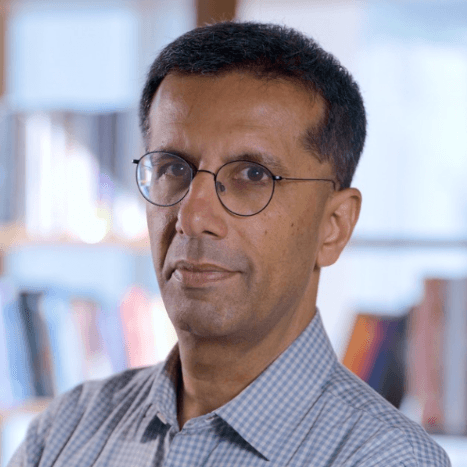
Artificial Intelligence is a force multiplier for the most difficult part of development work—reaching the last mile, at scale, through systems that are chronically under-resourced. However, the number of developmental organisations seriously deploying AI remains small relative to the opportunity.
Ashish Dhawan,
Founder-CEO, The Convergence Foundation
Ashish Dhawan,
Founder-CEO, The Convergence Foundation
Artificial Intelligence (AI) is no longer just a topic of conversation across The Convergence Foundation’s (TCF) networks – it is already being deployed. What is worth noting is the diversity of what it looks like in practice. The use cases span domains, mechanisms, and types of problems that resist easy summary, and that picture should shape how the broader philanthropic and development sector thinks about where to invest next. What makes the work across our portfolio distinctive is that these organisations are present close to impact, embedded in government systems, working with frontline workers, and accountable to measurable outcomes. That proximity gives them an unusually clear view of where the real bottlenecks lie, and it is shaping a thoughtful, grounded approach to how AI gets integrated: not as a technology overlay, but as a genuine response to problems they understand deeply.
Central Square Foundation (CSF) works across the EdTech ecosystem – supporting the creation of high-quality learning solutions, generating evidence on what works, helping governments adopt effective software, and creating public goods for the sector. National-level outcomes in foundational literacy and numeracy have improved under the NIPUN Bharat Mission, with CSF serving as a key knowledge partner. AI is now being brought to bear to sustain and deepen those gains. In February, CSF hosted a national dialogue on AI and education – a satellite event of the India AI Impact Summit that brought the Union Education Minister to the table alongside global philanthropies, state governments, and the leading EdTech innovators working at India's scale. At the same event, CSF released the Bharat Survey for EdTech - a comprehensive national picture of how technology is actually reaching low-income learners.

90%
Of low-income households now own a smartphone
The finding that 90% of these households now own a smartphone reframes the problem entirely: access is no longer the bottleneck. The question is whether AI can now close the gap between a device in every hand and a genuinely educated child. CSF's partnership with Anthropic – to support AI-powered tutoring, teacher coaching, and assessment tools for underserved communities – is a direct bet that it can.
The same logic is playing out in early childhood. Rocket Learning has spent years building a technology platform that reaches 5 million children and parents and 400,000 Anganwadi workers across 11 states, delivering localised learning content and AI-enabled coaching through WhatsApp, and working closely with the Ministry of Women and Child Development. Now, that foundation is being extended further. In partnership with the Government of Maharashtra and OpenAI, Rocket Learning has launched Shiksha Saathi: a multilingual AI assistant on WhatsApp that gives Anganwadi educators real-time guidance on child development, curriculum-aligned activities, and learning strategies, available in their language, on the device they already use. Maharashtra is the first state to implement this at scale, but the model is replicable across the country.
1.4M
India has Anganwadi centres across the country
Governments make decisions about millions of people based on data that is months old, gathered through surveys that are expensive, slow, and cover only a fraction of the population. Centre for Effective Governance of Indian States (CEGIS) ran a pilot this year that begins to change that arithmetic. Using Voice AI through the Listen at Scale initiative – in partnership with EkStep Foundation, AI4Bharat, and Sarvam – CEGIS deployed conversational AI calls across three live government programmes in Uttar Pradesh and Chhattisgarh: farmer registry enrollment, maternal nutrition monitoring, and an anti-filariasis drug drive. The AI handled routine interactions and triaged to human callers where needed – making high-frequency, district-level monitoring economically viable for the first time.
TrustBridge is building Large Language Model-based tools that help regulators – across power, finance, telecom, and infrastructure – draft orders that are better reasoned, more legally consistent, and less likely to be overturned on appeal. It is also automating the analysis of thousands of past regulatory orders to surface the patterns that drive remands and reversals. Improving the quality of a regulatory order unblocks capital at a scale that very few other interventions can match.

30-40%
Of particulate pollution in Indian cities is contributed by potholes and broken roads
Air Pollution Action Group (A-PAG) is developing a computer vision system that verifies whether civic defect repairs – the potholes and broken roads that contribute 30-40% of particulate pollution in Indian cities – have genuinely been completed. The tool is still being refined internally, but the underlying question it is trying to answer applies far beyond air quality: how do you verify delivery at the scale that government programmes operate?
What connects these efforts is a shared recognition that AI is a force multiplier for the most difficult part of development work: reaching the last mile, at scale, through systems that are chronically under-resourced. But this remains the exception rather than the rule. Very few organisations in India's development sector are seriously deploying AI relative to the opportunity, and the foundations to do so responsibly are not yet in place.

Recognising this challenge, TCF is building dedicated capacity, including hiring a Chief Technology Officer (CTO). The CTO will be charged with helping our portfolio in identifying high-potential use cases and building and deploying AI solutions on the ground. We are also keen to engage with others in the sector on the questions no single organisation can answer alone: around architecture, governance, and how we learn collectively from what is already working.
If these are questions you are working on, we would welcome the conversation.
To become a Viksit Bharat by 2047, India must grow its GDP 8x — a challenge that calls for urgency and clarity. Mission Economic Growth is The Convergence Foundation’s effort to focus attention on the few reform levers that can truly move the needle. This video series brings together leading voices to highlight what it will take — from manufacturing and exports to labour mobility and apprenticeship. It marks the start of a wider effort to catalyse ideas, partnerships, and action for India’s growth. Read more about our work here.

Highlights from our Network
At the India AI Impact Summit 2026, Central Square Foundation (CSF) showcased its work on responsible EdTech and AI for learning. Minister of Education Dharmendra Pradhan unveiled ShikshaNext, a Rs 170 crore multi-donor initiative, while Amitabh Kant released findings from the 2nd edition of the Bharat Survey for EdTech, covering 12,500 households across 10 states. CSF, alongside EkStep Foundation, also supported the release of the Casebook on AI in Education in collaboration with IndiaAI, Digital India, MeitY, and Skill India. ...
The Economic Survey 2026 highlights a critical structural gap in India’s innovation ecosystem: strong research capabilities but limited translation into industrial outcomes. It emphasises the need for Translational Research Centres as shared national infrastructure. This aligns closely with India’s Translational Research Initiative’s (ITRI) mission to enable long-term translational platforms that de-risk experimentation, strengthen industry-academia collaboration, and support scalable outcomes. With Anusandhan National Research Foundation’s proposed role in governing such facilities, this deve ...
Rocket Learning's Shiksha Saathi, an AI-powered learning assistant, was unveiled at the India AI Impact Summit 2026 by Chief Minister of Maharashtra Devendra Fadnavis and OpenAI's Chris Lehane. Designed to provide instant pedagogical support — from personalised lesson plans to automated reports — Shiksha Saathi equips preschool educators to deliver high-quality early learning with confidence. With this launch, Maharashtra is set to become the first Indian state to deploy an AI-enabled tool for Anganwadi educators at scale, strengthening early education for India's youngest learners. ...
SCALE, in partnership with The Convergence Foundation and Accelerate Indian Philanthropy, with India Impact Sherpas as knowledge partner, launched Turning Points: How Philanthropists Sparked Systemic Change. The coffee table book profiles 11 visionary philanthropists who transitioned from traditional giving to systemic philanthropy, highlighting their flagship initiatives, key lessons, and advice for fellow givers. It underscores the transformative potential of partnering with government for large-scale impact and urges philanthropists to adopt a portfolio approach, beginning with 20% allocati ...
Atithi Foundation formally established a Strategic Programme Support Unit working directly with the Secretary and officials to design and drive tourism development interventions nationwide. In December, Atithi Foundation partnered with Prosperiti and NITI Aayog to draft an Ease of Doing Business in Tourism report, identifying regulatory streamlining opportunities across five states. It was also invited to the Ministry of Tourism conclave in January to deliberate on the One State One Global Destination scheme, Ease of Doing Business, the India Tourism Stack, and e-visa reforms. ...

Accelerate Indian Philanthropy (AIP) co-hosted an intimate convening in Bengaluru with Neonates Foundation of India, featuring Peggy Dulany of the Rockefeller Family in conversation with Ajit Isaac of Quess Corporation, exploring philanthropic identity, trust-based collaboration, and purpose-driven leadership. AIP also welcomed Dr. Sunita Maheshwari and Dr. Arjun Kalyanpur, co-founders of The Telerad Group, to its growing community, bringing the total number of AIP Founders to 54, with their Telerad Foundation expanding access to quality diagnostics and healthcare for underserved communities. ...


A Large Language Model (LLM) is an Artificial Intelligence system capable of analysing and predicting language patterns by examining large text samples, and thereby generating natural language text.

A proud mother from Ghaziabad shares how her son has become more active and playful at home, and has also picked up drawing and colouring, ever since he started attending the Anganwadi centre. From running after the ball to running little errands for his parents — Mrs. Shahin sees him growing every day. Check out the full story here.


The Convergence Foundation seeks to be a powerful catalyst in India’s development journey, by creating momentum around pivotal ideas that have the highest potential for transformational change.
©2024-25 The Convergence Foundation
T&C | Privacy Policy
Designed with 🤍 by Sane Difference & Urbanhub Innovations